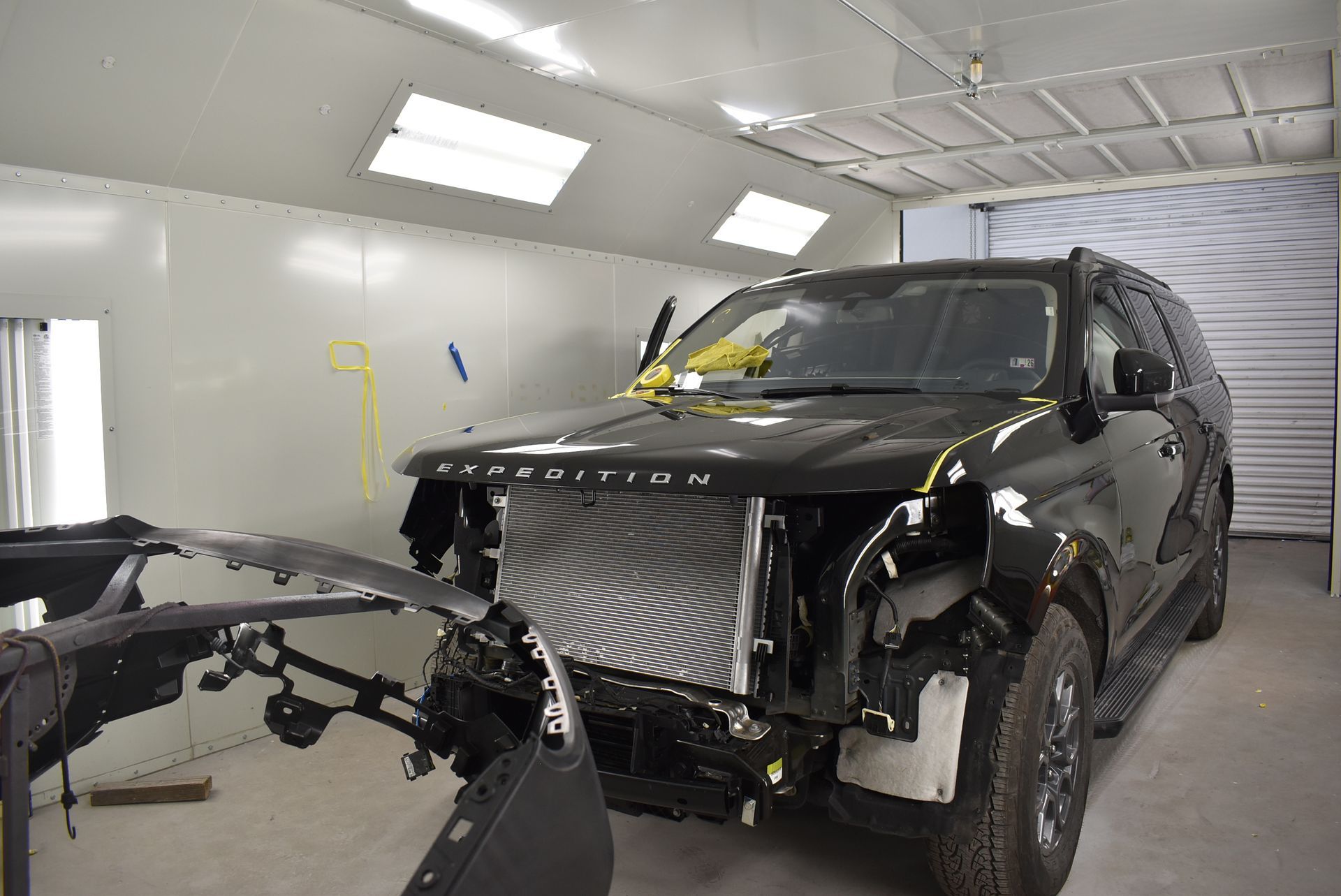
OEM vs. Aftermarket Parts: What's the Difference for Your Auto Body Repair?
When it comes to auto body repairs, the choice between OEM and aftermarket parts can significantly impact your vehicle's safety, how well it fits together, its warranty status, and even its future resale value.
This guide breaks down exactly what OEM and aftermarket parts are, why this distinction is so important for collision repair, and how factors like ADAS recalibration, insurance approvals, and warranty coverage play a role in making the right choice.
You'll get clear definitions, a rundown of the main pros and cons for each type of part, a handy comparison table for quality, a look at how specific parts differ, and a practical decision guide to help you make smart repair decisions, especially when choosing an auto body repair shop in Cumming.
TL;DR — Understanding OEM vs. Aftermarket Parts: What You Need to Know for Auto Body Repairs
- OEM parts match factory specs for fit, safety, and ADAS, helping preserve warranties and resale value
- Aftermarket parts can cost less and arrive faster, but quality varies and fitment may require extra labor
- For safety-critical parts—airbags, sensors, headlights, structure—use OEM or certified equivalents and calibrate
- Use aftermarket mainly for non-structural cosmetic pieces when budget and lead time matter, and vet certification
- Choose I-CAR Gold Class techs who document parts and ADAS calibration to safeguard performance
What Exactly Are OEM Parts?
OEM parts are Original Equipment Manufacturer components, meaning they're made to the exact same specifications as the parts that originally came on your vehicle. This ensures a perfect fit, tested safety, and adherence to factory tolerances.
Key Benefits of Using OEM Parts
- OEM parts offer a precise fit and finish, which cuts down on installation time and minimizes issues like gaps or alignment problems.
- OEM components ensure tested safety performance and proper integration with critical systems like airbag modules and crash structures.
- Using OEM parts can help maintain your vehicle's warranty terms, manufacturer service records, and often boosts resale value by documenting repairs that meet factory standards.
In essence, OEM parts reduce the guesswork in repairs where compatibility, calibration, and crash performance are critical.
What Are Aftermarket Parts?
Aftermarket parts are replacement components made by third-party manufacturers, not the original vehicle manufacturer. This category includes everything from high-quality, certified options to more budget-friendly copies.
How Aftermarket Parts Differ from OEM Parts
The primary differences between aftermarket and OEM parts lie in their origin, testing procedures, and documented compatibility.
Aftermarket parts are manufactured outside the OEM supply chain and might use different materials or manufacturing tolerances.
Some aftermarket companies produce excellent components that match OEM performance, while others focus on reducing costs, which can sometimes result in fitment issues or variations in finish quality.
Certified aftermarket parts can help reduce this variability, but it's important to remember that certification programs have different scopes and criteria than OEM testing.
Understanding these distinctions is key for owners to determine when aftermarket options are a cost-effective choice and when sticking with OEM quality is essential.
Benefits of Choosing Aftermarket Parts
- Aftermarket parts are often less expensive than OEM parts, which can lower your out-of-pocket costs for repairs not covered by insurance.
- Aftermarket parts typically have better availability, especially for older or discontinued models, which can shorten repair times.
- Some aftermarket options provide unique customization or styling choices that aren't available from OEM suppliers.
These advantages make aftermarket parts a sensible option for non-structural cosmetic repairs or for owners who prioritize immediate affordability. However, the decision should always take safety and warranty implications into account.
Potential Drawbacks of Aftermarket Parts
- The wide variation in quality among aftermarket parts can lead to fitment problems that require extra labor or refinishing work.
- Some aftermarket parts might not align correctly with ADAS sensors or function as intended during airbag deployment, potentially complicating calibration and compromising safety performance.
- Insurance company preferences and warranty coverage can affect reimbursement or long-term protection, so it's vital for consumers to document their part choices carefully.
Given these potential downsides, clear communication with your repair shop and insurance provider is essential to prevent unexpected issues and ensure the best safety outcomes.
How Does the Quality of OEM and Aftermarket Parts Differ?
This section compares measurable quality attributes and their real-world impact, using a structured table to clarify differences in fit, materials, ADAS compatibility, warranty, and cost.
The table below summarizes the key quality dimensions that influence repair decisions and overall safety.
| Quality Attribute | OEM Parts Characteristic | Aftermarket Parts Characteristic |
|---|---|---|
| Fit & Tolerances | Manufacturer-specified, consistent fit | Variable fit; depends on manufacturer controls |
| Materials & Finish | Factory-grade materials, matched coatings | Range from high-grade to cost-focused finishes |
| ADAS Compatibility | Designed for original sensor placement | May require evaluation and calibration adjustments |
| Warranty & Documentation | Supports factory-aligned documentation | Warranties vary by maker; may not preserve manufacturer records |
This comparison clearly shows that OEM parts generally minimize uncertainties in repair outcomes, while aftermarket parts require more careful vetting and potentially additional work to ensure proper function.
Which Specific Car Parts Show the Most Noticeable Differences Between OEM and Aftermarket?
Certain components exhibit distinct practical differences between OEM and aftermarket options, particularly when safety systems or complex fitment are involved.
The table below identifies high-impact parts, their typical OEM characteristic, and a common aftermarket characteristic to help you prioritize OEM selection when it's most critical.
| Part | OEM Characteristic | Aftermarket Characteristic |
|---|---|---|
| Headlights | Exact optical geometry, consistent beam pattern | Beam variation possible; may need alignment and testing |
| Bumpers | Integrated crash energy design | Fit and material variation; may affect crash behavior |
| ADAS Sensors | Factory-calibrated mounting and connectors | Mounting differences can affect calibration outcomes |
| Airbag Modules | Manufacturer-certified modules and connectors | Replacement modules vary; compatibility critical |
Understanding these differences empowers vehicle owners to advocate for OEM parts for headlights, sensors, airbags, and structural components to safeguard safety and calibration integrity.
How Can You Choose the Right Parts for Your Vehicle: OEM or Aftermarket?
Selecting the right parts involves balancing safety, cost, insurance considerations, and the impact on resale value. The decision matrix below outlines key decision factors, important considerations, and recommendations to guide you.
Always start by prioritizing safety-critical items and reviewing insurance and warranty implications before deciding on parts for cosmetic-only repairs.
| Decision Factor | Consideration | Recommendation |
|---|---|---|
| Safety/Structure | Impact on crash behavior and airbags | Prefer OEM for structural/airbag components |
| ADAS & Sensors | Need for exact mounting and calibration | Use OEM or certified equivalent; plan for calibration |
| Cost & Availability | Budget constraints and lead times | Consider aftermarket for non-structural parts |
| Resale & Warranty | Documentation and manufacturer records | OEM supports resale value and warranty continuity |
- Ask your repair facility if a part is safety-critical and requires an OEM component.
- Request documentation of part numbers and calibration records for any ADAS or airbag work performed.
- Review your insurance policy details and ask if they restrict or mandate OEM parts for your claim.
- Opt for certified aftermarket options only when they meet documented standards for fit and safety.
How Are Emerging Technologies Like EVs and ADAS Impacting OEM vs. Aftermarket Parts?
The rise of advanced vehicle technologies means that using the correct parts and ensuring professional calibration is more critical than ever.
ADAS systems and EV-specific components demand precise compatibility to function safely. ADAS relies heavily on exact sensor placement, mounting geometry, and electrical interfaces.
Aftermarket substitutions that alter any of these can necessitate recalibration or, worse, lead to compromised safety performance.
Electric vehicles (EVs) introduce specialized components like battery enclosures, thermal management materials, and unique electrical connectors that require manufacturer-grade parts or certified equivalents to maintain thermal integrity and crashworthiness.
Technicians with I-CAR Gold Class training are better equipped to assess parts against manufacturer technical bulletins and to perform ADAS recalibration or EV-related repairs correctly.
- I-CAR Gold Class certified technicians possess a deep understanding of manufacturer procedures and calibration requirements for ADAS systems.
- Proper ADAS recalibration directly links part selection to system performance and the vehicle's overall safety ratings.
- For EVs, using components that align with manufacturer specifications is crucial for preserving battery protection and structural integrity.
Forsyth Collision's I-CAR Gold Class status and our comprehensive
Collision Repair and Auto Body Repair services ensure the safe handling of ADAS calibration and EV-specific considerations. We also work closely with insurers to document all repair choices.
For vehicle owners in Cumming, GA, requesting a thorough inspection and a clear explanation of part selection—along with documented calibration—will help ensure your repairs meet modern safety expectations and preserve your vehicle's long-term value, a commitment you can expect from a trusted Cumming GA auto body repair shop.
Conclusion
Understanding the distinctions between OEM and aftermarket parts is fundamental to making informed decisions that prioritize safety, proper fit, and long-term value for your vehicle.
By carefully considering the advantages of each option, you can ensure your repairs meet both performance standards and your insurance requirements.
For residents in Cumming, partnering with a qualified repair shop like Forsyth Collision can provide the clarity needed to select the best parts for your vehicle's specific needs.
Explore our services today to safeguard your vehicle's integrity and performance for years to come.