How body shops match car paint and repair deep scratches
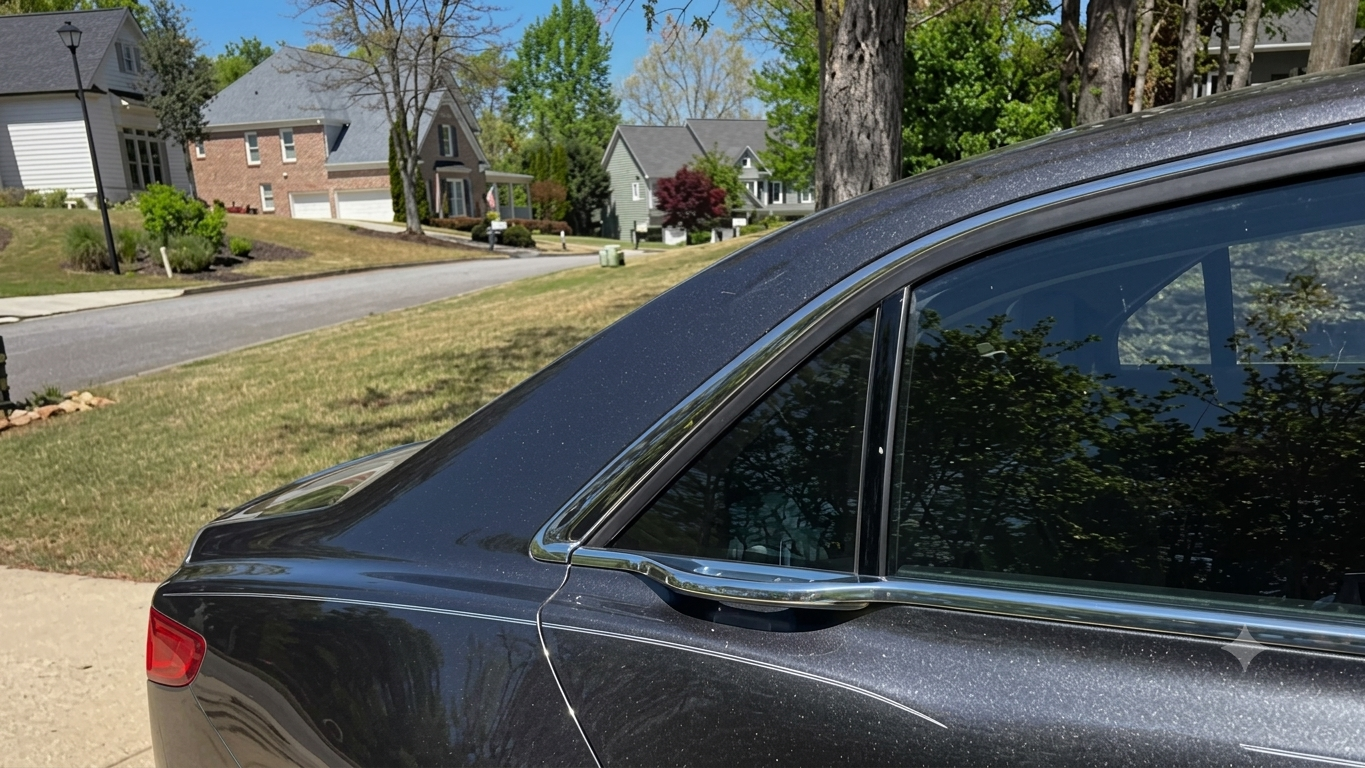
Discovering a deep scratch or rock chip across your vehicle's door panel is frustrating, especially when you're worried a repair will leave behind a noticeable, mismatched color patch. In this guide, you'll learn the exact 5-second test body shops use to assess clearcoat damage and how digital spectrophotometers create flawless factory color formulas.
You'll also discover why scheduling professional
paint repair ensures your car gets back the look it deserves with a seamless, lifetime-backed factory finish.
TL;DR: Key takeaways
- Professional paint repair relies on multi-angle digital spectrophotometers to measure paint aging and metallic flake orientation before mixing a custom formula.
- The quick fingernail test helps you determine whether paint damage is a surface clearcoat scuff or a deep scratch that exposes primer or bare steel.
- Full panel clearcoat blending creates seamless transitions and prevents the peeling edges often seen with quick spot touch-ups.
The 5-second fingernail test: Diagnosing scratch depth
Determine the severity of paint damage at home by checking which layer of your vehicle's finish has been breached.
Modern automotive finishes consist of three functional outer layers over bare metal: the clearcoat (the top transparent shield providing gloss and UV defense), the basecoat (the colored pigment layer), and the primer (the bonding and anti-corrosion barrier adhering directly to bare steel or aluminum).
Run your fingernail gently across the scratch at a 90-degree angle to diagnose the depth:
- Your fingernail glides smoothly over the mark: The scratch is confined to the upper surface of your clearcoat. Fine compound polishing or micro-sanding can buff out these minor scuffs.
- Your fingernail catches slightly, but no color change is visible: The damage extends deeper into the clearcoat. This requires targeted machine compounding or localized spot clearcoat repair.
- Your fingernail catches firmly, and you see white, gray, or bare metal: The scratch has cut completely through the clearcoat and colored basecoat. When sheet metal is exposed to humidity and rain, oxidation begins within days, making professional repair essential to prevent rust from spreading beneath adjacent paint.
Why paint matching requires computerized optical analysis
Matching automotive paint involves measuring how light reflects off aged pigments, clearcoat yellowing, and metallic flake orientation.
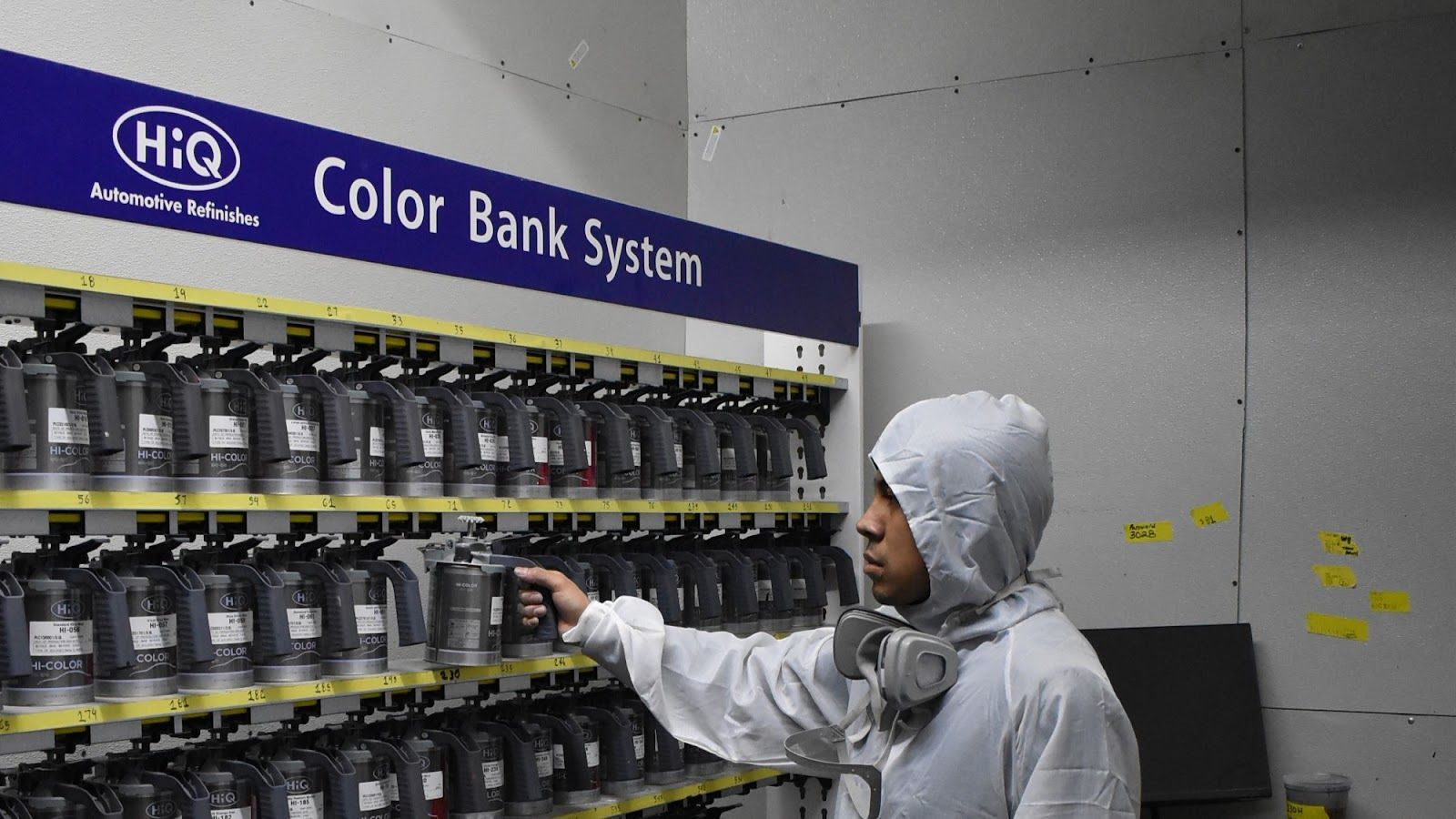
Every vehicle carries an OEM paint code printed on a placard inside the driver's door pillar, under the hood, or inside the trunk well. While this code gives technicians the factory recipe, it doesn't account for real-world environmental exposure. Sun, road grime, and heat cause pigments to fade and clearcoats to shift slightly over time.
To account for this aging, technicians place a digital spectrophotometer flush against the undamaged panel next to the repair. The scanner reads the exact hue, saturation, and metallic flake layout under full-spectrum light. Computer software compares the scan against thousands of variant formulas, fine-tuning the mix down to microscopic increments so the new paint blends seamlessly with surrounding panels.
Clearcoat blending vs. spot touch-ups: Why full panel refinishing lasts
Spot touch-up pens and partial clearcoat patches often fail prematurely, while full panel clearcoat application preserves long-term durability.
| Feature / Consideration | DIY / Mobile Spot Touch-Up | Professional Full Panel Clearcoat Blending |
|---|---|---|
| Color Transition | Hard paint edges visible in direct sunlight | Seamless optical blend feathered into adjacent panels |
| Clearcoat Boundary | Ended mid-panel and melted with solvent | Extended to factory body seams and panel edges |
| UV Resistance | Thin localized clear vulnerable to solar breakdown | High-solids polyurethane clear with full UV inhibitors |
| Risk of Halos / Peeling | High risk of visible rings within 6–12 months | Zero risk of edge delamination over time |
| Warranty Coverage | Rarely warrantied against weather exposure | Backed by a lifetime metal and paint warranty |
When paint repairs stop in the middle of a panel, technicians must use blending solvents to melt the fresh clearcoat edge into the aged clearcoat. Over time, that thin edge can oxidize, creating a faint cloudy halo or peeling margin. By prepping and clearing the entire panel out to natural body seams, our team at Forsyth Collision eliminates vulnerable transition edges, allowing the repair to qualify for our lifetime warranty.
For drivers seeking comprehensive
collision and paint services in Cumming, our technicians assess damage depth thoroughly before performing any repair work.
How professional body shops repair deep scratches: Step by step
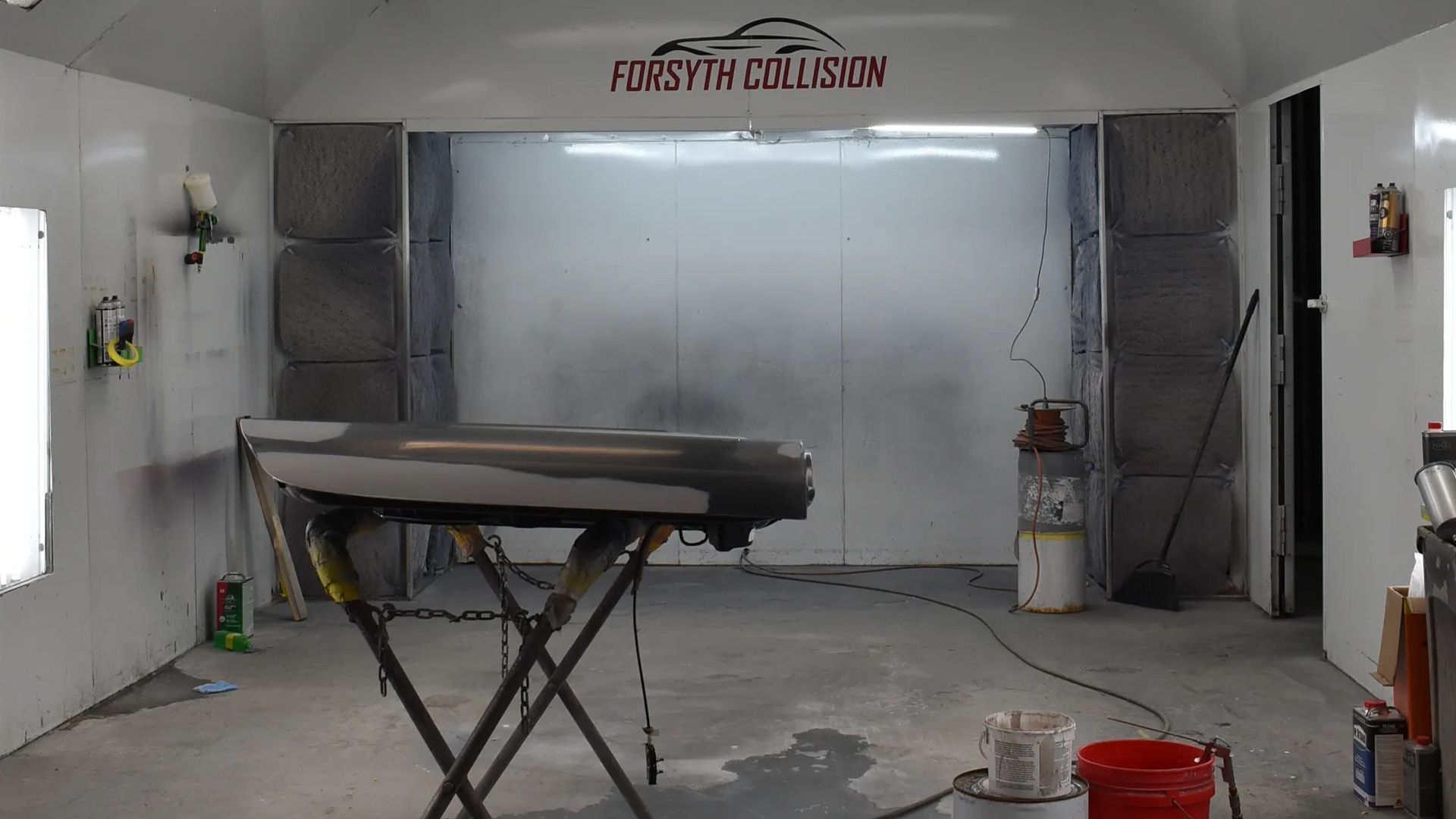
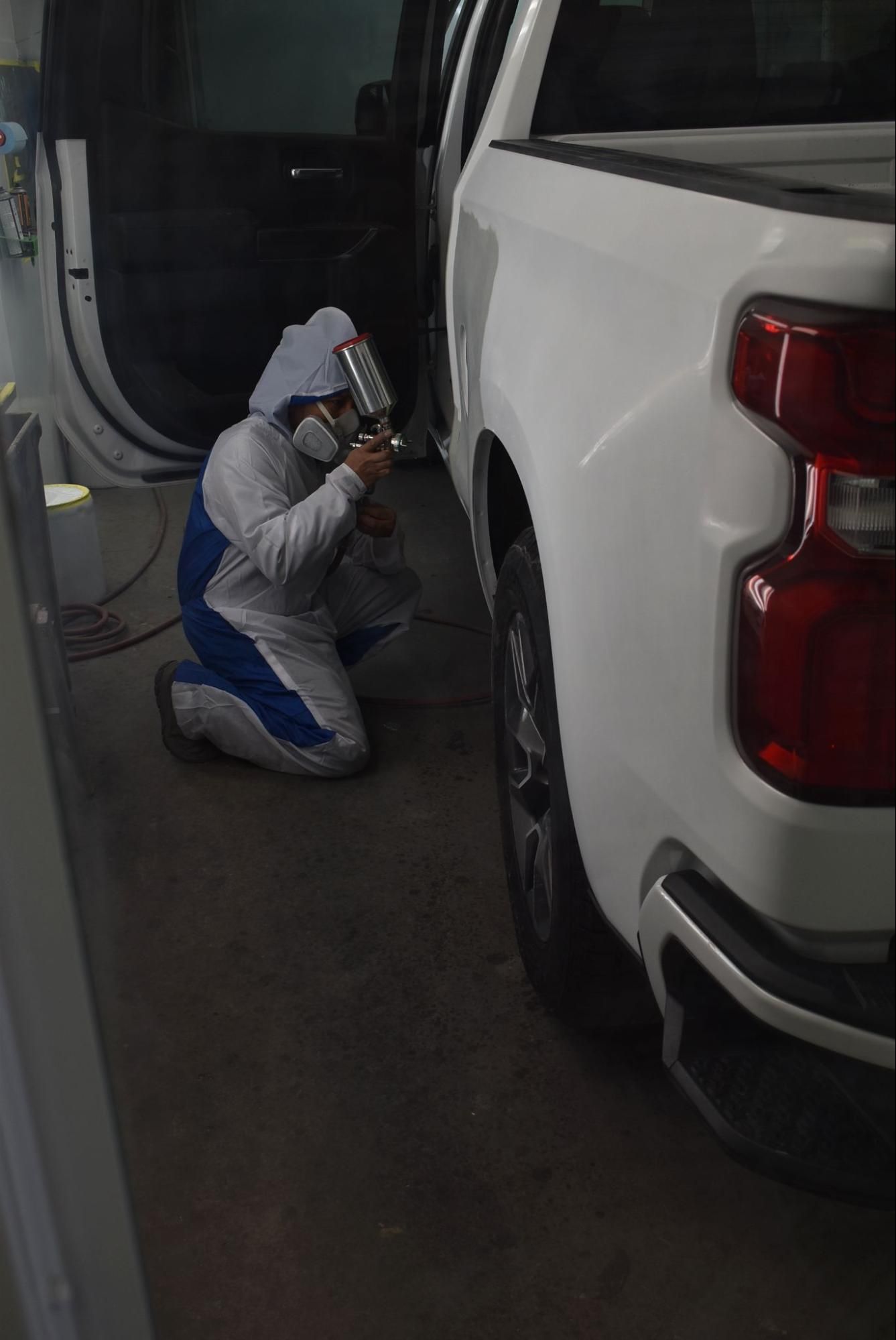
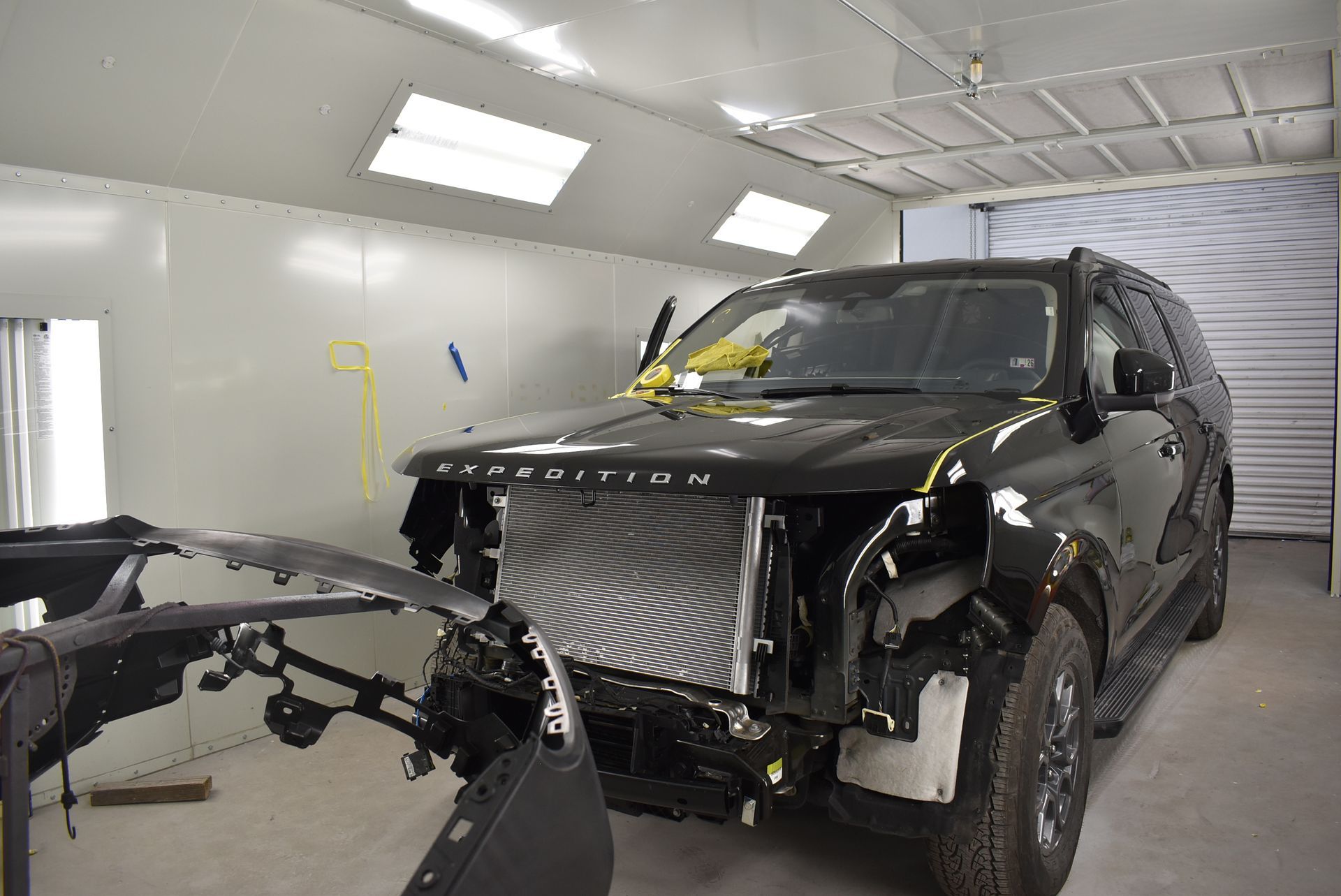
Repairing a deep scratch down to bare metal requires a systematic multi-step process inside a climate-controlled downdraft spray booth.
- Surface preparation and feather-edging: The damaged panel is washed, degreased, and chemically stripped of road contaminants. Technicians sand the damaged paint edges into a gradual slope to eliminate sharp ridges and ensure a smooth foundation.
- Primer application and block sanding: A corrosion-resistant primer is sprayed over exposed metal. Once dry, technicians hand-sand the surface with precision sanding blocks to guarantee the repair matches the vehicle's original body contour.
- Masking and anti-static preparation: Adjacent windows, trim, lighting, and wheels are completely taped off. Technicians ground the vehicle and wipe the repair zone with anti-static cleaners to prevent airborne dust from settling during painting.
- Basecoat application and color feathering: Inside a sealed downdraft spray booth, technicians apply custom-mixed basecoat over the primed area and feather the color outward into undamaged panel sections for an invisible blend.
- Clearcoating and heated curing: Two coats of durable polyurethane clearcoat are applied across the entire panel. The spray booth then circulates clean, heated air at 140°F to cure the finish into a hard, resilient shell.
Explore our recent guides on the Forsyth Collision auto body blog to see how our certified technicians handle structural frame repairs, panel replacements, and insurance claim coordination.
Protecting your new paint: Critical 30- and 60-day aftercare rules
Proper washing practices and delaying waxes while fresh paint cures ensure your new finish stays durable and glossy.
While modern spray booths bake clearcoat so it's dry and road-ready upon pickup, the underlying paint needs time to fully harden and breathe over the following two months.
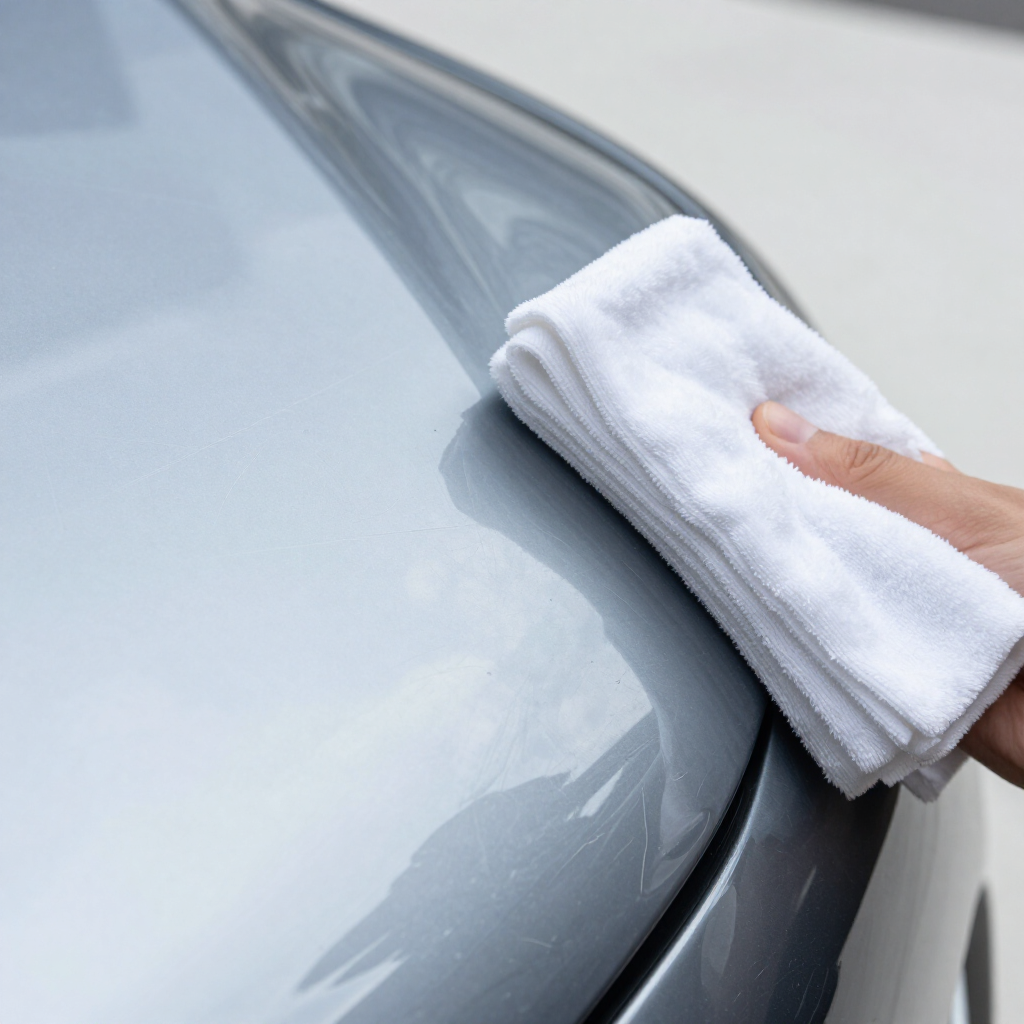
- First 30 days (hand wash only): Wash your vehicle exclusively by hand using clean microfiber wash mitts, mild car soap, and cool water. Avoid automated car washes with stiff nylon brushes, and don't use high-pressure spray wands close to the new finish.
- First 60 days (no wax or sealants): Avoid applying paste waxes, synthetic paint sealants, or ceramic coatings. Sealing the surface too early traps evaporating moisture, which can cause clouding or hazing in the clearcoat.
- Ongoing maintenance: Rinse away tree sap, bird droppings, and bug splatter promptly with lukewarm water to prevent chemical etching.
To learn more about OEM repair standards, vehicle owners can consult technical resources from the National Institute for Automotive Service Excellence (ASE) and industry repair benchmarks from the Society of Collision Repair Specialists (SCRS).
Restore your car's factory paint with Forsyth Collision
Minor scratches and stone chips left unaddressed expose underlying metal panels to moisture, Georgia humidity, and long-term corrosion. At Forsyth Collision, our I-CAR Gold Class certified craftsmen combine digital spectrophotometer color matching with climate-controlled downdraft spray booths to deliver seamless, factory-correct finishes backed by a lifetime paint warranty. Voted Best of Forsyth 2025 in Auto Body Repair, our team takes the stress out of your repair by providing upfront digital estimates and coordinating directly with your insurance carrier.
Whether you need a rock chip touched up, a bumper scuff repaired, or a full panel refinished, we're here to give your vehicle the care and precision it deserves.
About the author

Salih Hamid is the Founder and Owner of Forsyth Collision, LLC in Cumming, Georgia. With more than a decade of hands-on collision repair, auto painting, and facility management experience, Salih leads an I-CAR Gold Class certified team holding OEM certifications for Nissan, Hyundai, Genesis, Chrysler/FCA/Mopar, and Kia. Recognized as the Best of Forsyth 2025 winner in Auto Body Repair by the Forsyth County News, Salih is dedicated to restoring vehicles to factory safety and finish standards across North Georgia.