Why DIY touch-up paint peels in Georgia heat (and how certified mechanics fix it right)
If you've spotted a fresh rock chip or scratch on your car, spending $15 on a touch-up bottle at an auto parts store seems like a quick win. But here's what most vehicle owners discover too late: within just a few weeks under the North Georgia sun, that quick fix often turns into an unsightly, raised spot of misaligned color that flakes, peels, and exposes your car to hidden rust.
In this guide, you will learn how a certified auto body team executes professional
paint repair, from multi-angle digital color matching to full-panel clear coat blending, and how to use a simple 5-second fingernail test in your driveway to evaluate scratch depth. By understanding these shop protocols, you will avoid wasted repair dollars, protect your car's trade-in value, and keep your vehicle looking factory-fresh for life.
- Over-the-counter touch-up bottles apply pigment without proper primer bonding, clear coat protection, or exact color calibration, leading to early peeling.
- Professional clear coat blending extends beyond the scratch site, feathering basecoat color into adjacent panel areas before applying a continuous topcoat.
- Digital color matching scans aged paint under multi-angle lighting to compensate for sun fading and regional weather wear across North Georgia.
- Unsealed paint edges allow humidity and road debris to reach underlying body panels, accelerating metal oxidation in humid climates.
Need expert advice on vehicle paint damage?
Schedule a complimentary estimate todayHow modern car paint systems are built beyond the surface color
Before fixing a scratch, it helps to understand how your vehicle's factory finish is built layer by layer. Factory automotive finishes consist of four protective layers designed to absorb gravel strikes and resist weather damage:
- Substrate preparation: Base steel, aluminum, or composite plastic panels are treated to prevent rust and promote paint adhesion.
- E-coat & primer surfacer: Electro-deposited coatings seal raw metal at the factory level, followed by a thick primer surfacer that fills micro-imperfections.
- Basecoat color: A thin layer containing specific color pigments, metallic mica, or pearlescent flakes.
- Clear coat: A transparent top layer containing UV inhibitors and acrylic resins that shield the basecoat while delivering high-gloss depth.
When a scratch cuts through the clear coat into the basecoat or metal panel, brushing store-bought paint into the groove leaves the surrounding clear coat unsealed. Moisture and road debris seep under those exposed edges, causing the surrounding clear coat to flake away in expanding rings.
Quick driveway inspection: testing your scratch depth at home
You can evaluate paint damage right in your driveway using a quick fingernail test:
- Lightly run your fingernail across the scratch perpendicular to the mark.
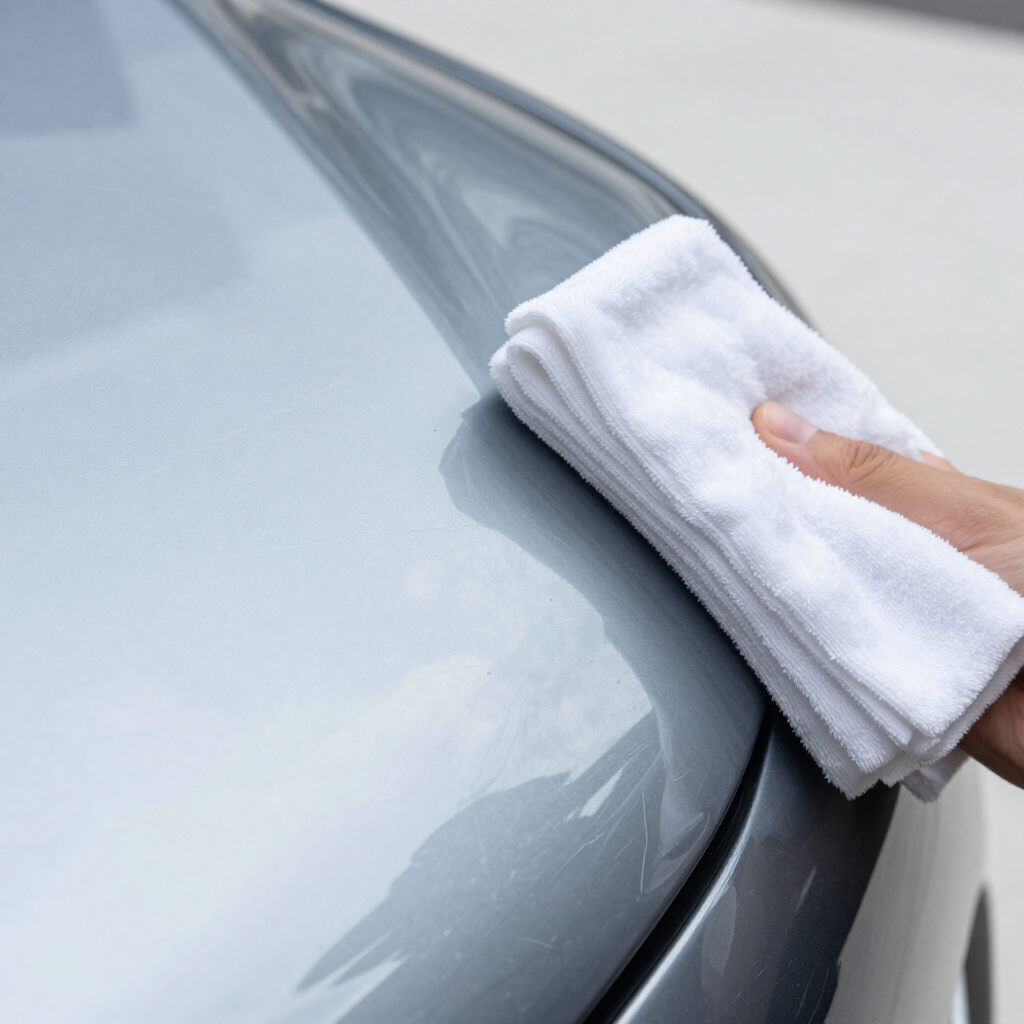
- If your nail glides smoothly over without catching, the damage is isolated to the top clear coat layer and can often be polished out.
- If your nail catches in a groove, the scratch has cut through the clear coat into the basecoat. Polishing won't resolve deep grooves. The panel requires refinishing to lock out moisture.
- If you spot bare steel or dark composite plastic, the substrate is exposed to North Georgia air. Prompt panel sealing is necessary to prevent rust.
Why DIY brush touch-ups and quick spot repairs fail
Many vehicle owners try touch-up pens or spray cans to save time. While these products temporarily cover bare metal, they lack the chemical formulation and mechanical bonding needed for lasting protection.
The problem of paint oxidation and color drift
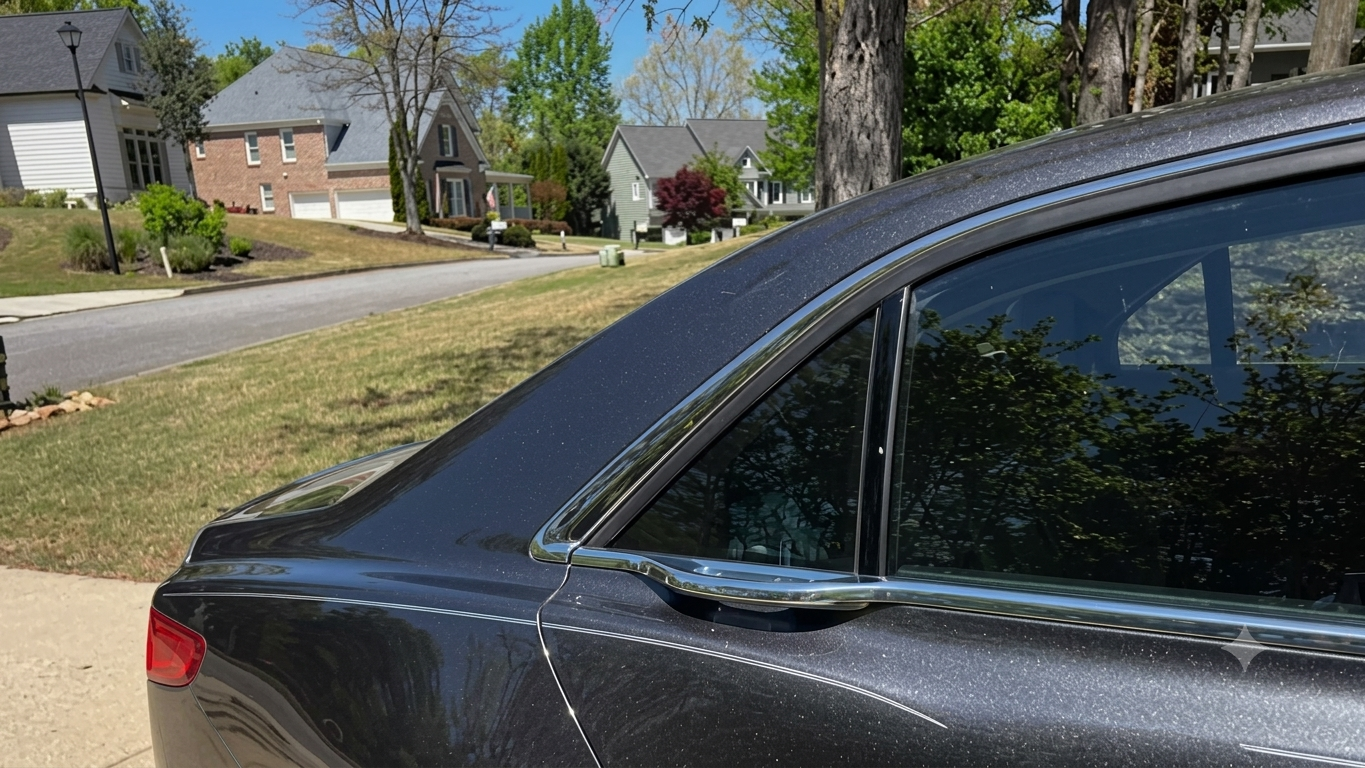
Even when using a bottle marked with your car's exact Original Equipment Manufacturer (OEM) paint code, fresh paint straight from a tube rarely matches paint exposed to sun and weather for two or three years. Solar radiation and automatic car washes alter the shade of your original clear coat over time. Applying fresh, unfaded paint directly into a scratch creates a dark, noticeable outline across the panel.
Why air-drying paints can't match cured factory coatings
Store-bought touch-up pens dry simply through solvent evaporation. By contrast, professional refinishing relies on two-component (2K) urethane chemistry. Inside a spray booth, clear coats undergo a chemical cross-linking reaction when mixed with specialized hardeners and cured under controlled heat. This chemical bond forms a durable shield that single-stage air-dry paints can't replicate.
| Repair aspect | DIY touch-up pen / bottle | Professional clear coat blending |
|---|---|---|
| Color matching | Static factory paint code (ignores aging) | Computerized spectrophotometer calibration |
| Clear coat protection | Single-stage air-dry lacquer (no hardener) | 2K Urethane catalyzed clear coat |
| Panel transition | Hard, raised edges visible under light | Seamless micro-feathered transition |
| UV resistance | Low; breaks down within 3–6 months | Full OEM-spec UV inhibitors |
| Warranty coverage | None | Lifetime craftsmanship and paint warranty |
The professional refinishing process step-by-step
Restoring damaged car paint to factory standards requires strict adherence to I-CAR Gold Class technical standards and clean environmental controls. Here is how technicians restore a damaged panel back to factory condition:
First-hand shop testing methodology
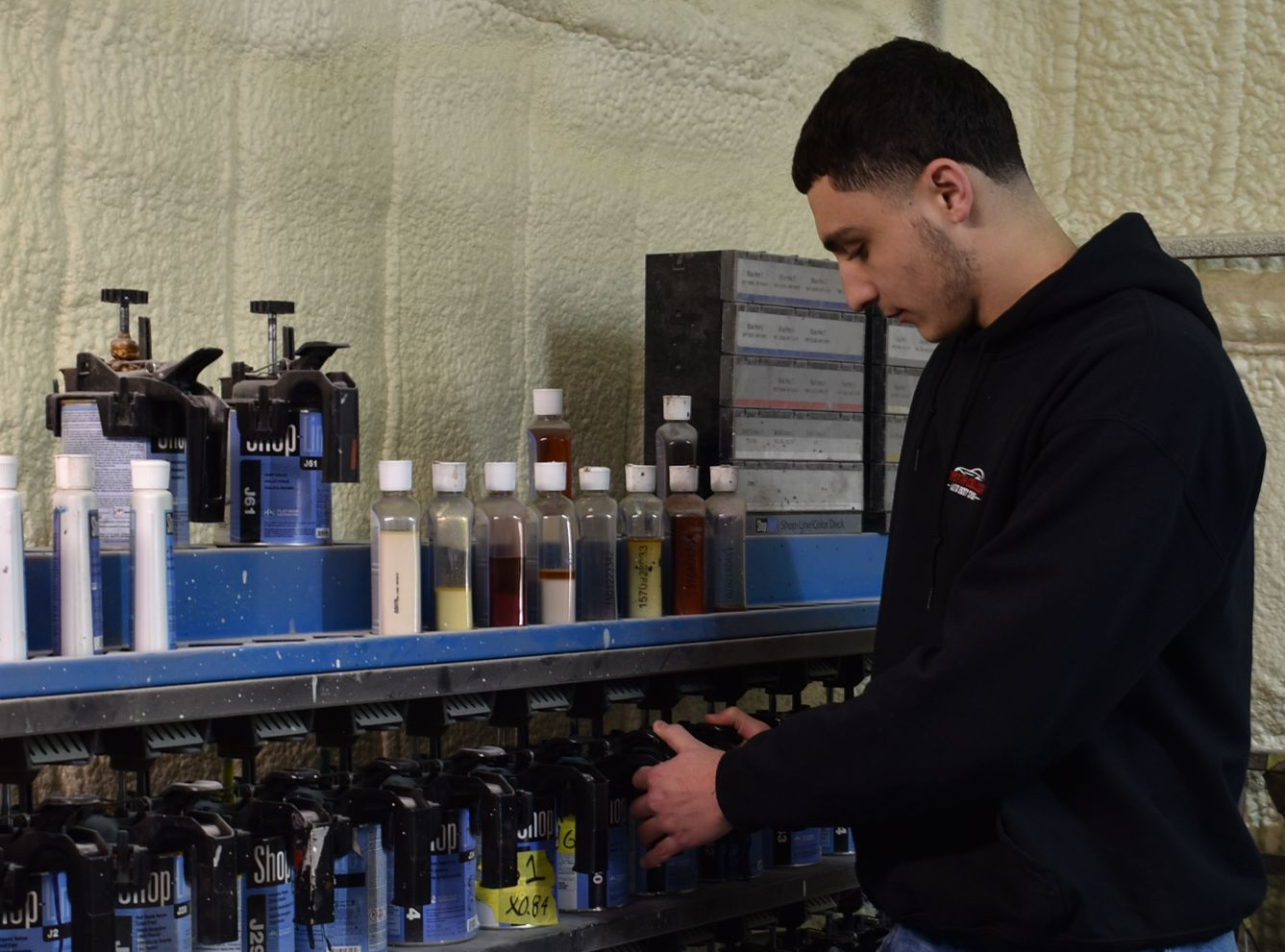
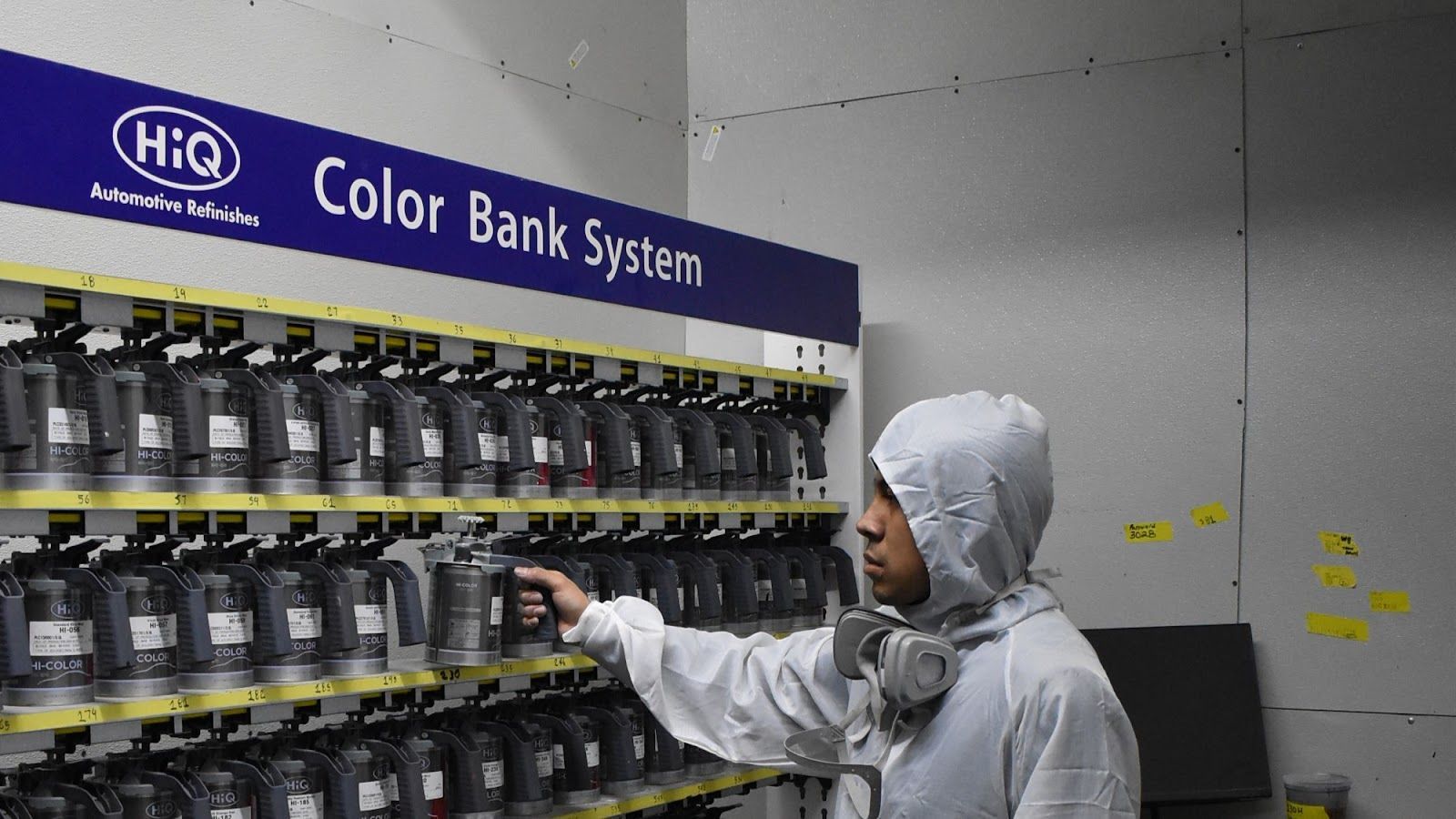
At our Cumming collision repair facility, every refinishing job starts with digital color diagnostics. We use multi-angle spectrophotometers to scan your vehicle's paint in natural light. This data feeds into color-mixing software that formulates custom basecoats down to fractions of a gram, matching metallic flake alignment to your car's current finish.
1. Panel decontamination and mechanical sanding
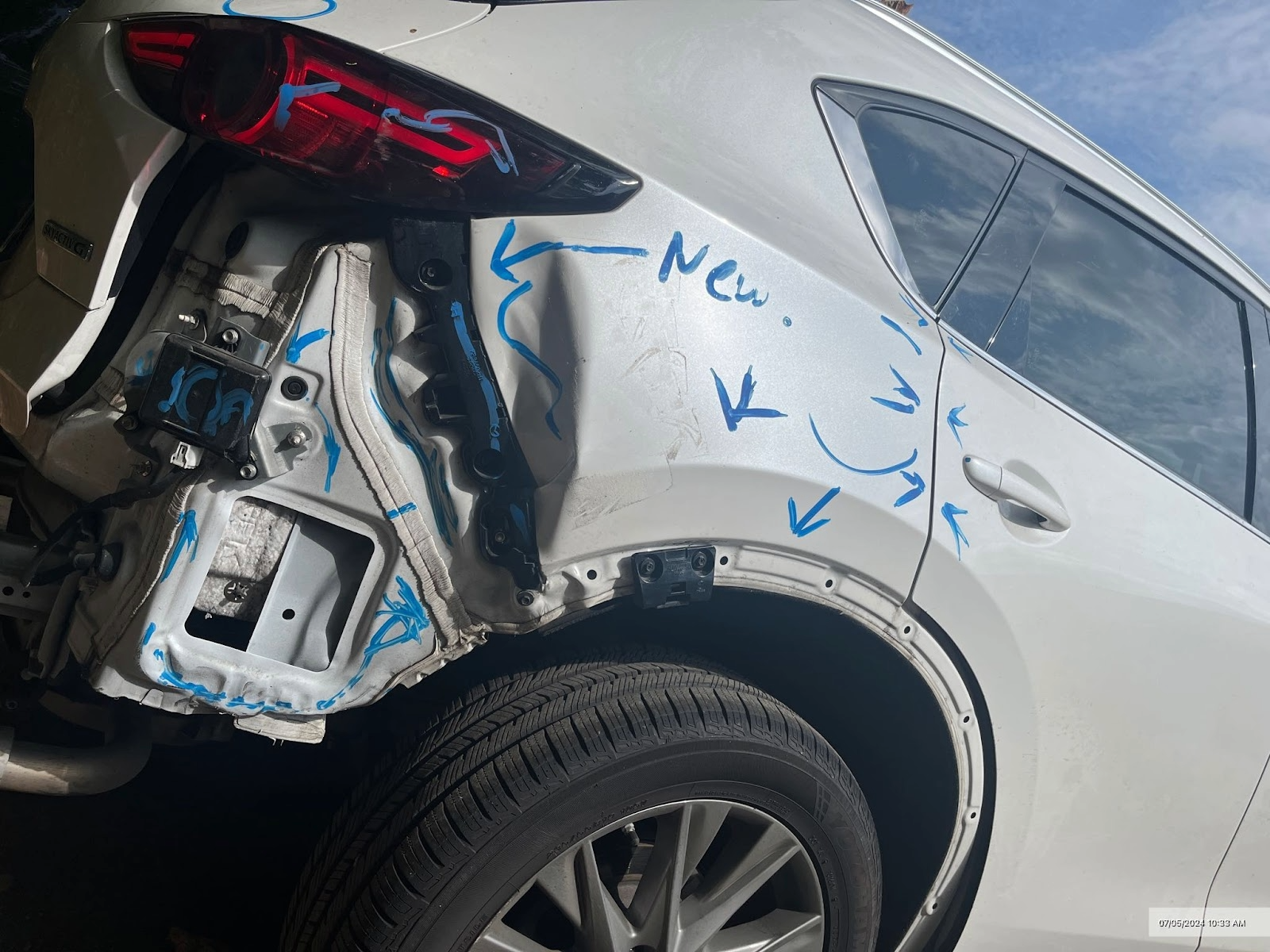
Technicians wash the panel with wax and grease removers to clear silicone, tar, and road grime. The damaged area is sanded with fine abrasives to remove fractured clear coat edges, creating a tapered transition down to sound primer.
2. Digital spectrophotometry and custom color formulations
Technicians place a digital spectrophotometer against the body panel to measure light reflectance across three distinct angles, analyzing metallic flake orientation and subtle shade shifts caused by sun exposure.
3. Precision basecoat application and micro-feathering
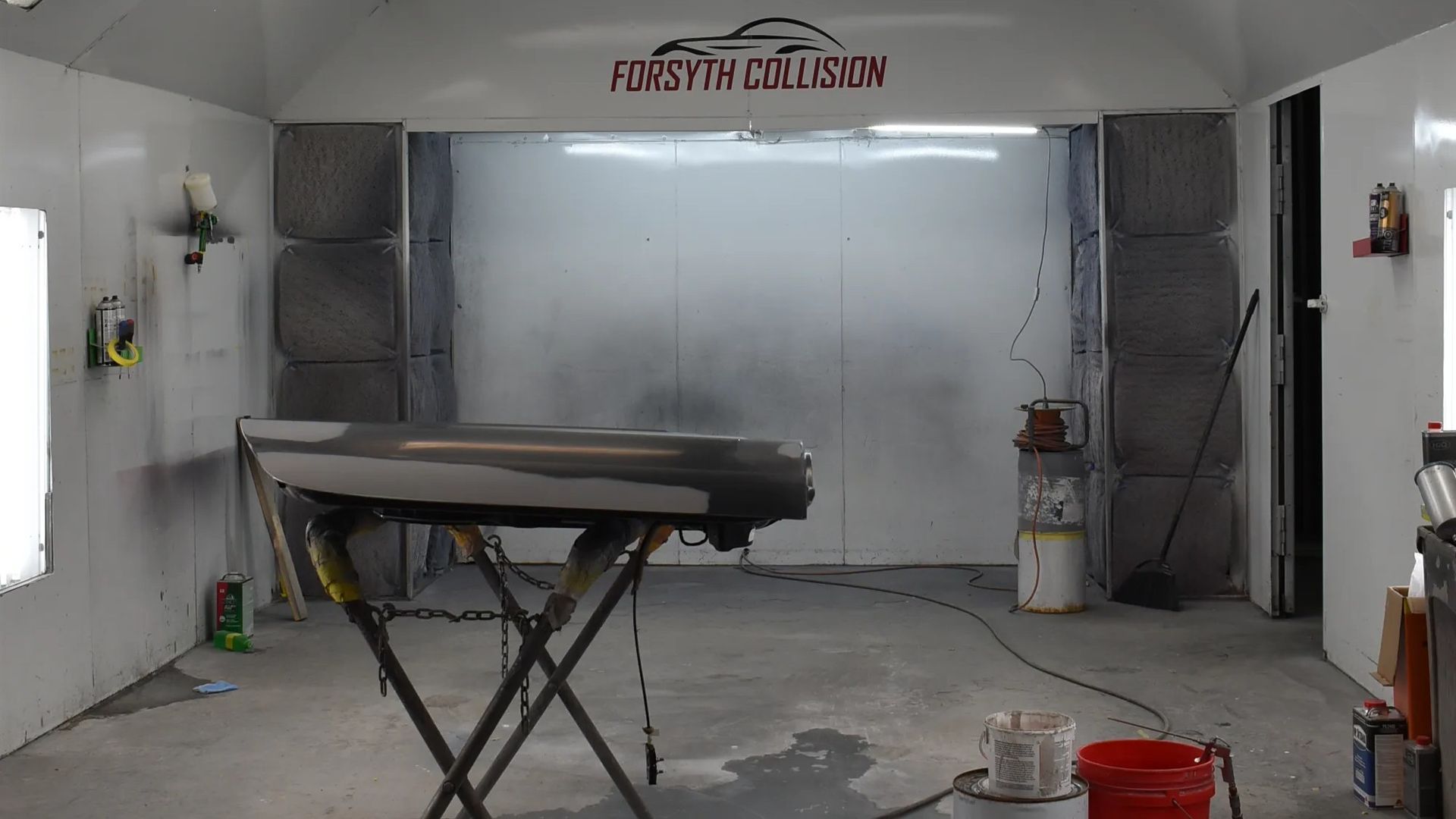
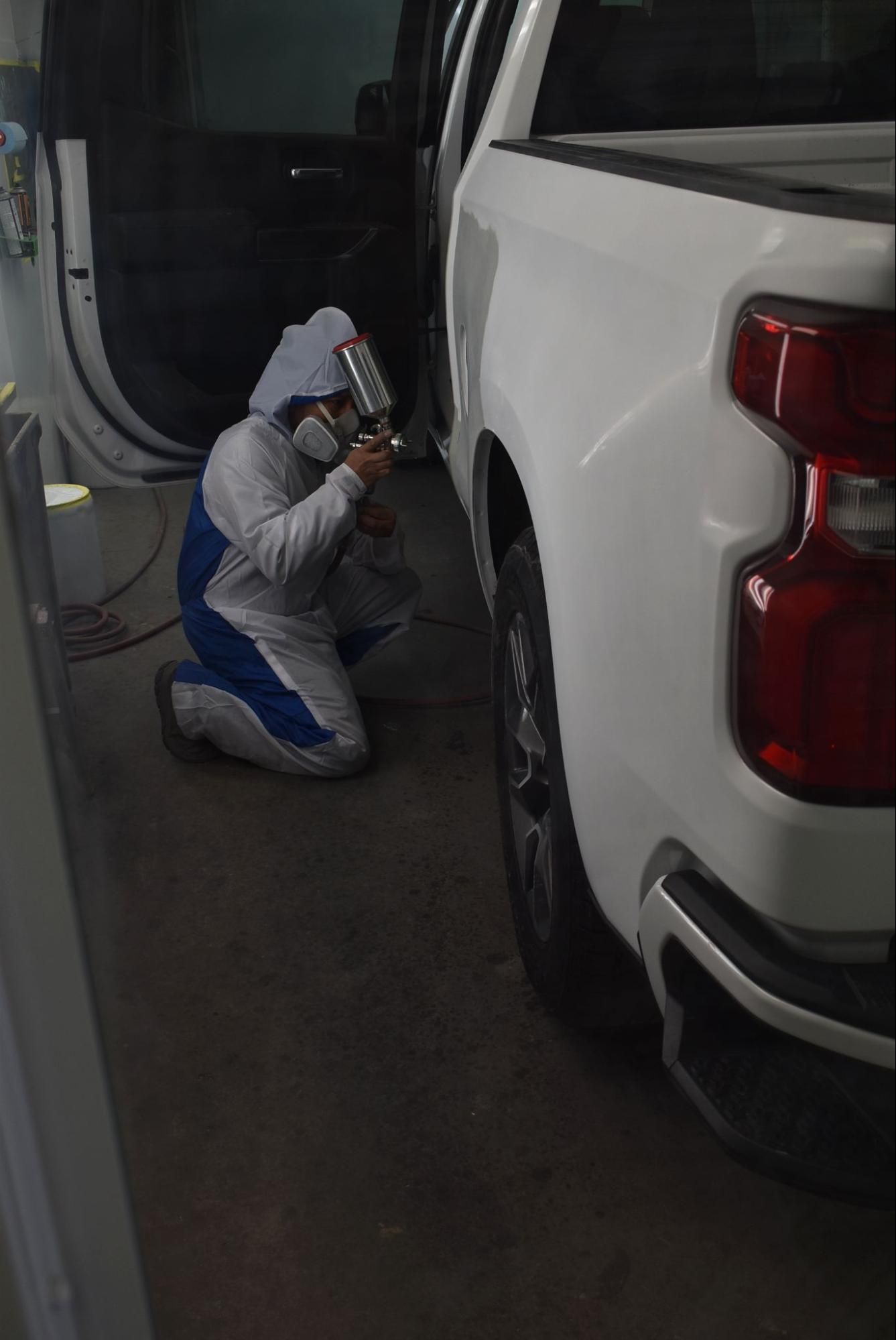
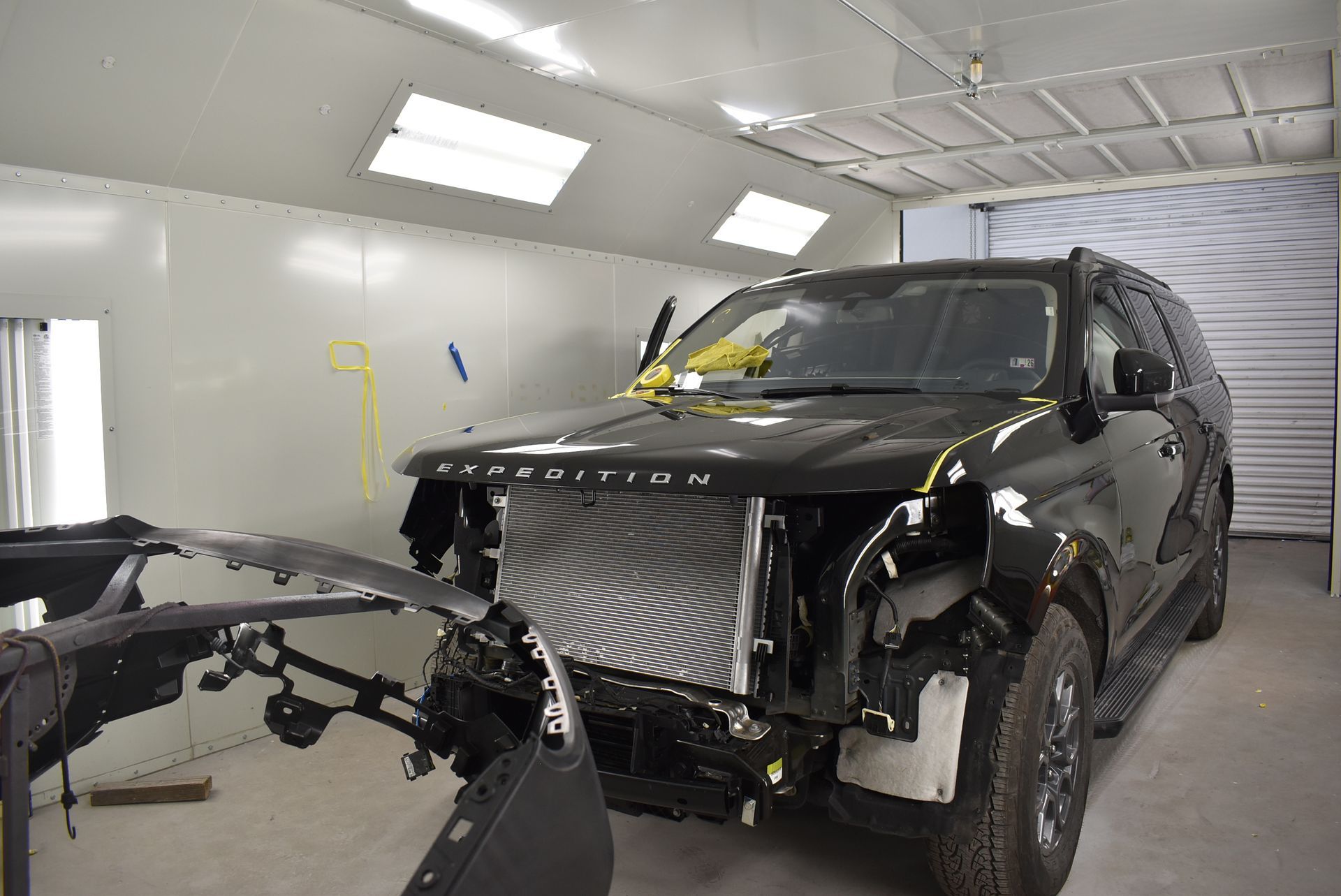
Inside a downdraft spray booth, technicians apply basecoat color using high-volume, low-pressure (HVLP) equipment. Color is applied over the repair zone and feathered outward into undamaged panel areas, creating an invisible transition into the existing paint.
4. Full-panel clear coat application
Professional refinishing does not stop at the edge of the scratch. Technicians apply a continuous double coat of 2K urethane clear across the entire panel, from seam to seam and body line to body line. This encapsulates the repair area under a single protective shield without leaving dry spray lines or raised clear coat edges.
Environmental and technical considerations for Georgia drivers
Driving across North Georgia presents specific climate challenges for vehicle finishes. Pine pollen, red clay, summer rainstorms, and intense UV rays accelerate paint breakdown when scratches remain unsealed.
Managing low-VOC regulations and environmental safety
Modern auto body shops utilize waterborne paint systems that comply with EPA-compliant low-VOC paint formulations. Waterborne basecoats reduce volatile organic compound emissions while delivering clean color clarity and accurate metallic alignment.
Protecting against corrosion in humid climates
High humidity in North Georgia speeds up iron oxidation whenever steel panels are exposed. A rock chip left unsealed through a humid summer can develop micro-rust beneath surrounding paint layers. At Forsyth Collision, our technicians apply anti-corrosive etch primers and epoxy sealers before applying topcoats, stopping rust before it spreads.
Choosing the right auto body shop for your paint repair
When evaluating local repair options in Cumming and Forsyth County, vehicle owners can look for specific facility capabilities and warranty protections:
- Verify manufacturer OEM certifications that require factory-approved paint lines and repair protocols.
- Confirm paint is applied inside a climate-controlled downdraft booth with multi-stage air filtration to prevent dust nibs.
- Ensure technicians hold I-CAR Gold Class or OEM certifications, offering clear communication, free estimates, and multilingual support in English, Spanish, and Arabic.
- Look for a written lifetime warranty covering metalwork, paint adhesion, and clear coat gloss retention.
To review our team's repair process, visit our transparent auto body repair process guide or learn more about our professional auto body shop in Cumming, GA service page.
Conclusion
Covering paint scratches with brush-on products might seem like a quick shortcut, but it leaves body panels vulnerable to clear coat peeling, color mismatching, and underlying rust. Choosing full-panel clear coat blending executed in a controlled spray booth preserves your vehicle's appearance and trade-in value.
When you're ready to restore your vehicle to factory-matched condition, work with a local team that prioritizes craftsmanship and straightforward care.
Contact the repair team at Forsyth Collision today to schedule a free estimate.
About the author
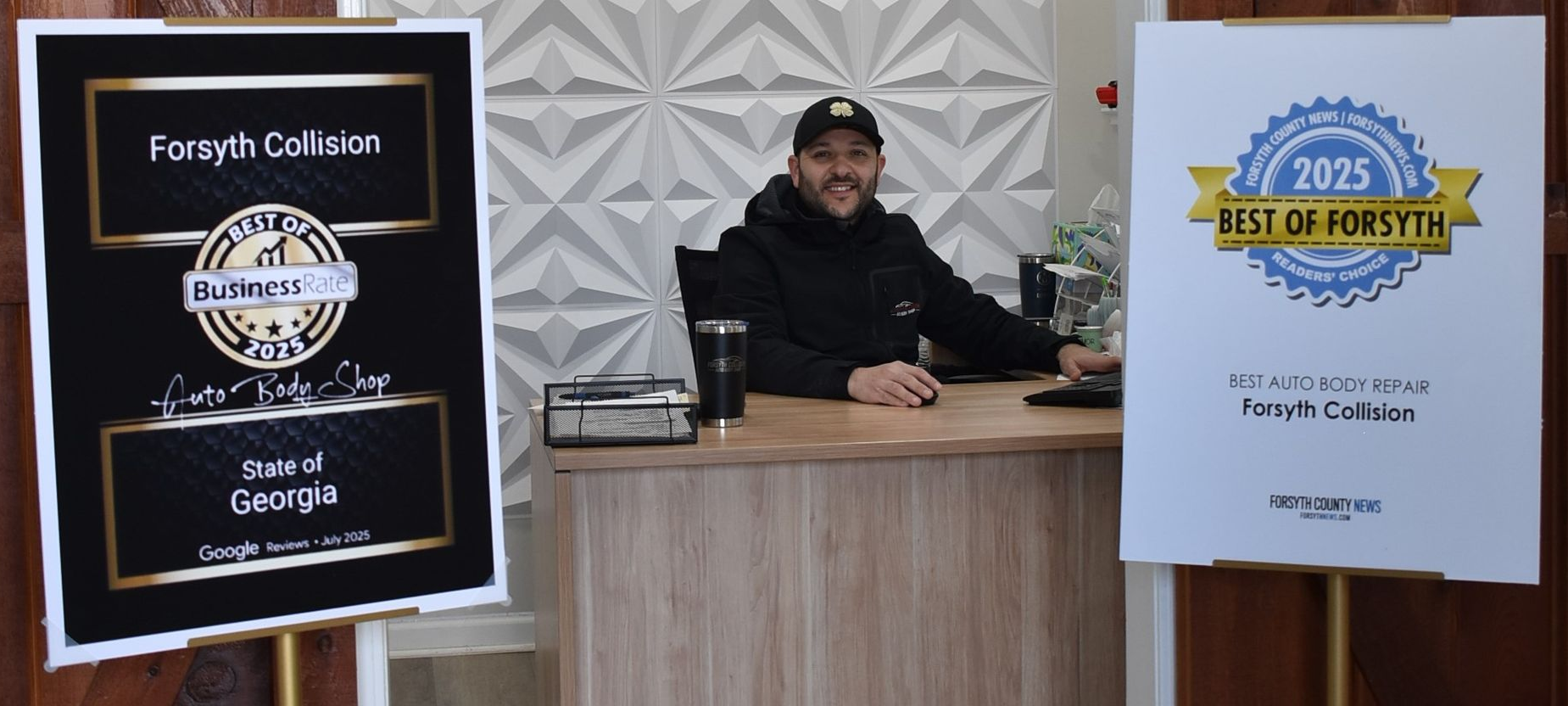
Salih Hamid is the owner of Forsyth Collision in Cumming, Georgia. Combining I-CAR Gold Class technical training with friendly neighborhood service, Salih and his team provide OEM-certified repairs, lifetime warranties, and a comfortable environment for drivers across Cumming and North Georgia. Operating from a facility equipped with heated downdraft spray booths and computerized spectrophotometers, Salih specializes in OEM collision restoration, computer color matching, and lifetime-warrantied refinishing.