What to know before painting a bumper with radar sensors
A scraped bumper is annoying enough. Before it gets painted, check one more thing: whether radar sensors sit right behind it. Blind-spot warning and adaptive cruise can depend on those sensors, and the wrong paint or filler job may affect how they work.
We're Forsyth Collision, an I-CAR Gold Class auto body shop in Cumming. This guide shows you how to tell whether your bumper has sensors and what to ask before any
paint repair starts.
TL;DR: Quick answer
- If your car has blind-spot warning, rear cross-traffic alert, or adaptive cruise, a radar sensor may be mounted behind the bumper.
- Each carmaker sets its own limits on paint and repairs near that sensor.
- Before you approve the work, ask the shop to show you your carmaker's repair steps and how they'll check the sensor afterward.
Does your bumper have radar sensors behind it?

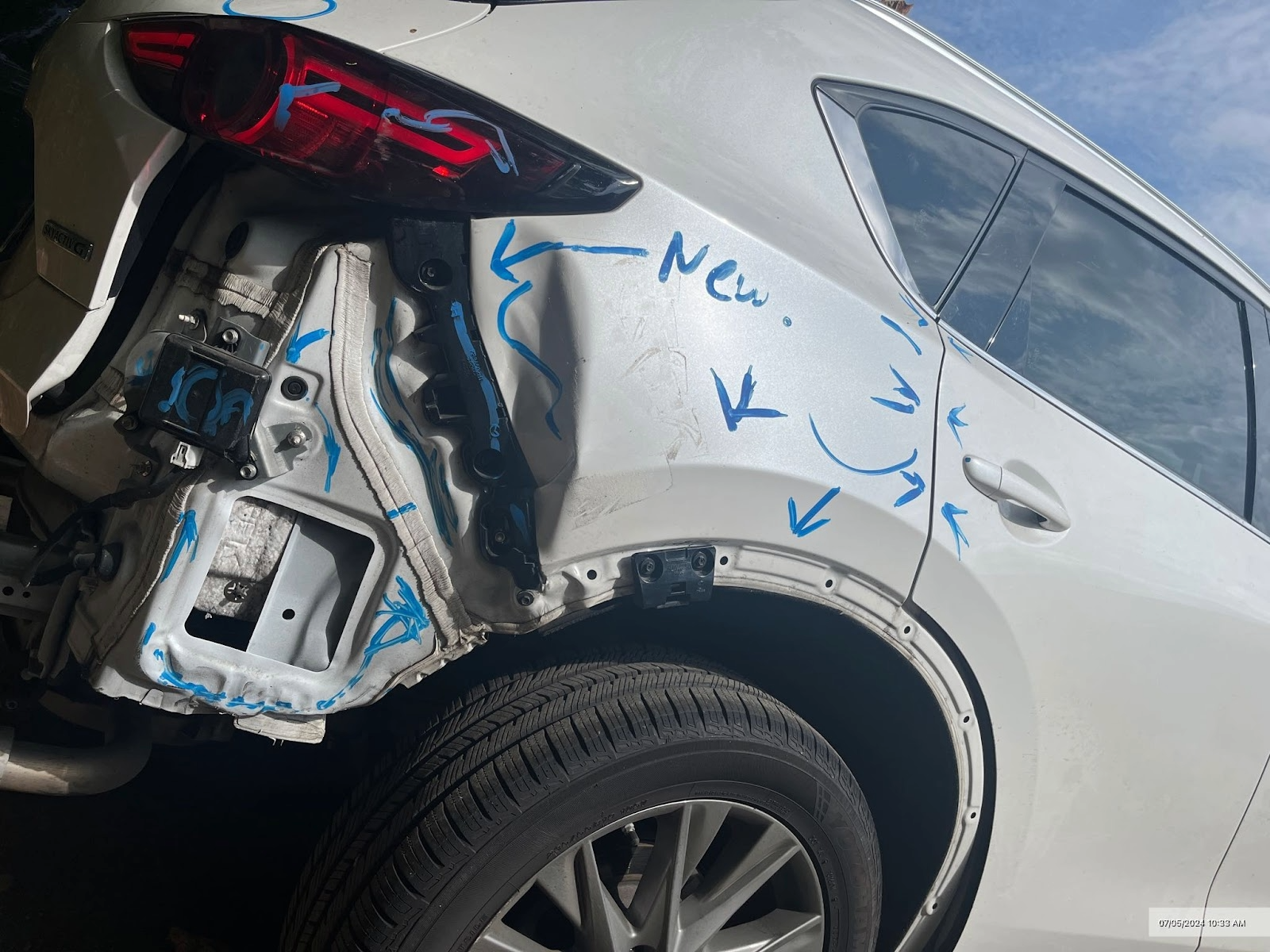
Start with your car's features. Blind-spot warning and rear cross-traffic alert often use radar inside the rear bumper, and adaptive cruise often uses radar up front.
Use these steps to check:
- Look for blind-spot warning, rear cross-traffic alert, or adaptive cruise on your window sticker, in your owner's manual, or in the driver-assist settings on your dash.
- Check your side mirrors. A small warning icon there usually means blind-spot sensors in the rear bumper.
- Look for small round dots on the bumper. Those are parking sensors. They work differently from radar, but Stellantis's bumper repair guidance says parking sensors and their brackets shouldn't be repaired either.
- Ask the shop to look up your vehicle identification number (VIN). It often shows your car's equipment and points to the carmaker's repair steps. If it doesn't, the shop can check behind the bumper cover.
Why paint and filler matter near the sensor
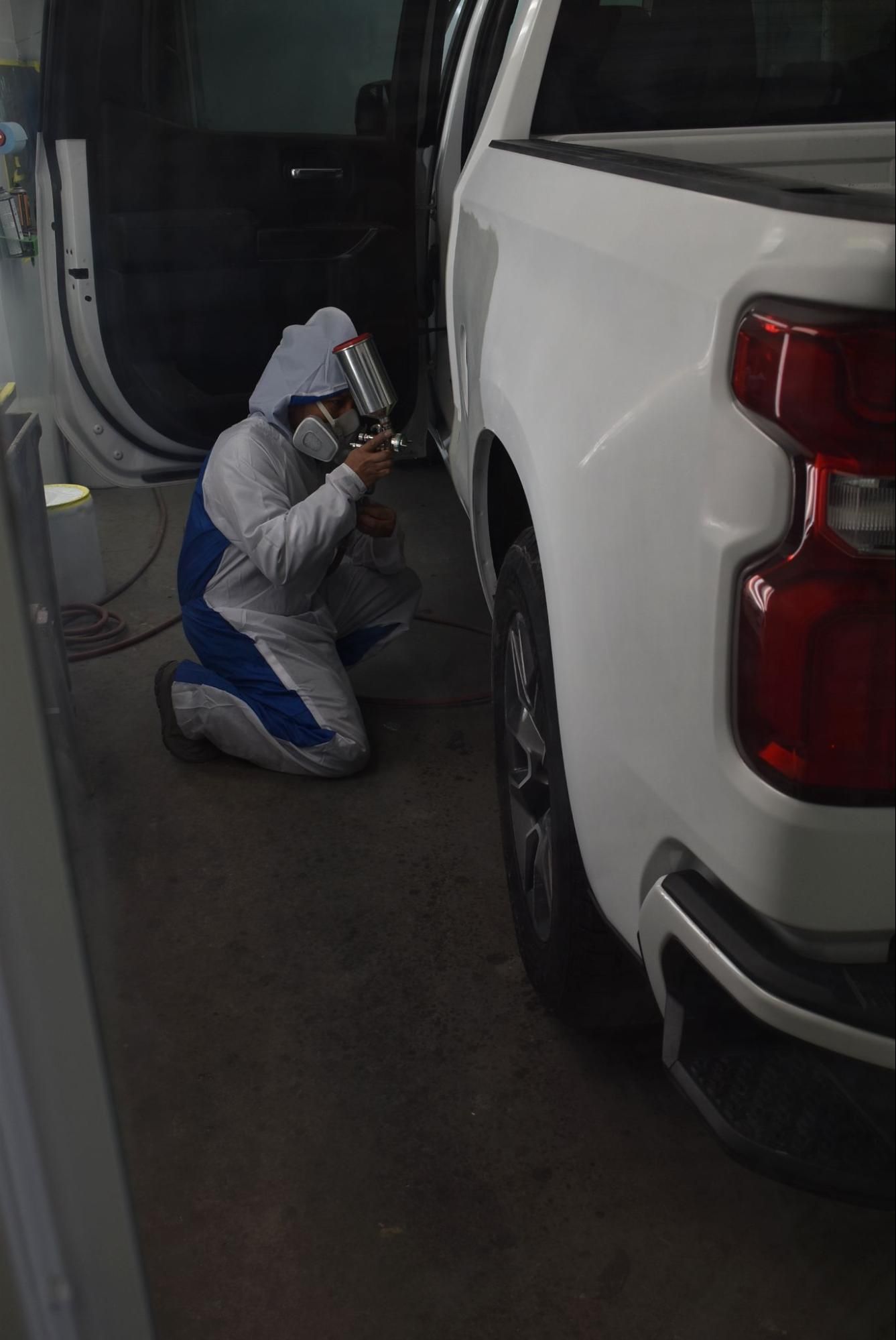
Radar reads the road through the bumper cover. Paint and repairs change that cover, so carmakers limit what shops can do in front of the sensor.
- Each coat of paint adds thickness. Stellantis says factory paint is usually 2.5 to 4 thousandths of an inch thick (shops call these mils), and it caps refinishing at 12 mils or three topcoats.
- Plastic repairs change the shape of the cover. Hyundai's position is that plastic repairs aren't recommended on bumpers with radar in the corners, and I-CAR notes a reshaped surface may affect how the radar performs.
- Overspray can mean a new sensor.
Genesis's position, which matches Hyundai's, says a corner radar that's damaged or hit with paint overspray has to be replaced and recalibrated, meaning adjusted so it reads correctly again.
Bumper painted before? Ask for a measurement
Every repaint adds thickness, so a bumper that's been painted before can reach the limit sooner. If you bought the used car or know about earlier bodywork, tell the shop and ask them to measure the paint before adding more.
What carmakers allow near bumper sensors
Rules differ by brand, and sometimes by model. Here's what four major carmakers have published, as summarized by I-CAR, the collision repair industry's training organization.
- Stellantis brands, including Chrysler, Dodge, Jeep, and Ram, cap refinishing at 12 mils or three topcoats. They don't allow repairs to the bumper plastic or any filler within about 10 inches (25 cm) of the blind-spot sensor.
- Hyundai and Genesis allow touch-up paint in front of the corner radar. They don't recommend plastic repairs on those bumpers, and they want the radar masked or removed before painting.
- Kia's position is that paint repair near the rear corner radar may keep the system from working properly. Kia also calls for genuine Kia parts where that radar sits.
- Nissan and INFINITI don't support any repair, filler, or paint work near the rear side radar. They call for a new bumper cover instead.
Driving a different brand? Ask the shop whether your carmaker has published bumper repair guidance before they quote the job. Kia's parts rule is also a good reason to understand factory vs. aftermarket parts before any bumper work.
Repair, refinish, or replace: how the decision usually goes
Where the damage sits matters as much as how bad it looks. Use this as a starting point, then confirm it against your carmaker's repair steps.
| What you see | Likely path | Why |
|---|---|---|
| A scuff or scratch away from the sensor | Repair the spot, then ask whether the new paint will reach the sensor area | Paint limits still matter if the refinish covers the sensor area |
| A small chip in front of a corner radar on a Hyundai or Genesis | Touch-up paint may be allowed | Both brands permit touch-up there |
| A crack, gouge, or dent near the sensor | A new bumper cover is often the safer route | Stellantis bans filler near the blind-spot sensor, Hyundai and Genesis don't recommend plastic repair, and Nissan and INFINITI call for a new cover |
| A bumper that's been painted before | Measure the paint before adding coats | Stellantis caps refinishing at 12 mils or three topcoats |
| A cracked or oversprayed sensor or bracket | Replace and recalibrate | Hyundai and Genesis require it for corner radar, and Stellantis says not to repair parking sensors or brackets |
A new bumper cover still needs paint, so color match is the next question. Here's how to tell whether a repainted panel will match the rest of your car.
What a sensor problem can cost

If a sensor does need replacing, the bill can climb quickly.
AAA's 2023 repair-cost research found that driver-assist systems can add up to 37.6% to the total repair cost after a crash.
AAA priced front radar sensors at $500 to $1,300 and front or rear parking sensors at $300 to $1,000. Its research included a 2023 Ford F-150, Nissan Rogue, and Toyota Camry. Replacing driver-assist parts averaged $1,540 in a minor front collision repair and $684 in a minor rear one, on top of the bodywork.
Careful paint work helps keep a sensor off that bill.
Five questions to ask before anyone paints your bumper
These questions show quickly whether a shop is working from your carmaker's repair steps. Ask them for the estimate and get the answers in writing.
- Does my car have sensors behind this bumper, and where are they?
- What do my carmaker's repair steps say about this bumper?
- Will you measure the paint thickness before and after painting?
- How will you protect the sensors from overspray?
- How will you check that the system works before I pick up the car, and is that check on the estimate?
Getting your bumper checked in Cumming
We're an I-CAR Gold Class shop. To earn that, a shop needs trained people in four roles, including refinish (paint) technicians, and I-CAR's Gold Class standards require ongoing yearly training.
We're also certified for FCA brands, including Chrysler, Dodge, Jeep, and Ram. Estimates are free, we work with all insurance companies, and original owners can ask about our lifetime paint warranty. Learn more about our
auto body shop in Cumming, and bring your questions to the estimate.
Get the scuff fixed and keep your safety features working
A bumper scuff is usually a simple fix. On a car with radar behind the cover, it stays simple when the repair follows your carmaker's rules. Check what your car has, then bring the five questions to your estimate.
Ready when you are.
Request your free estimate and we'll take a look at that bumper.
About the author
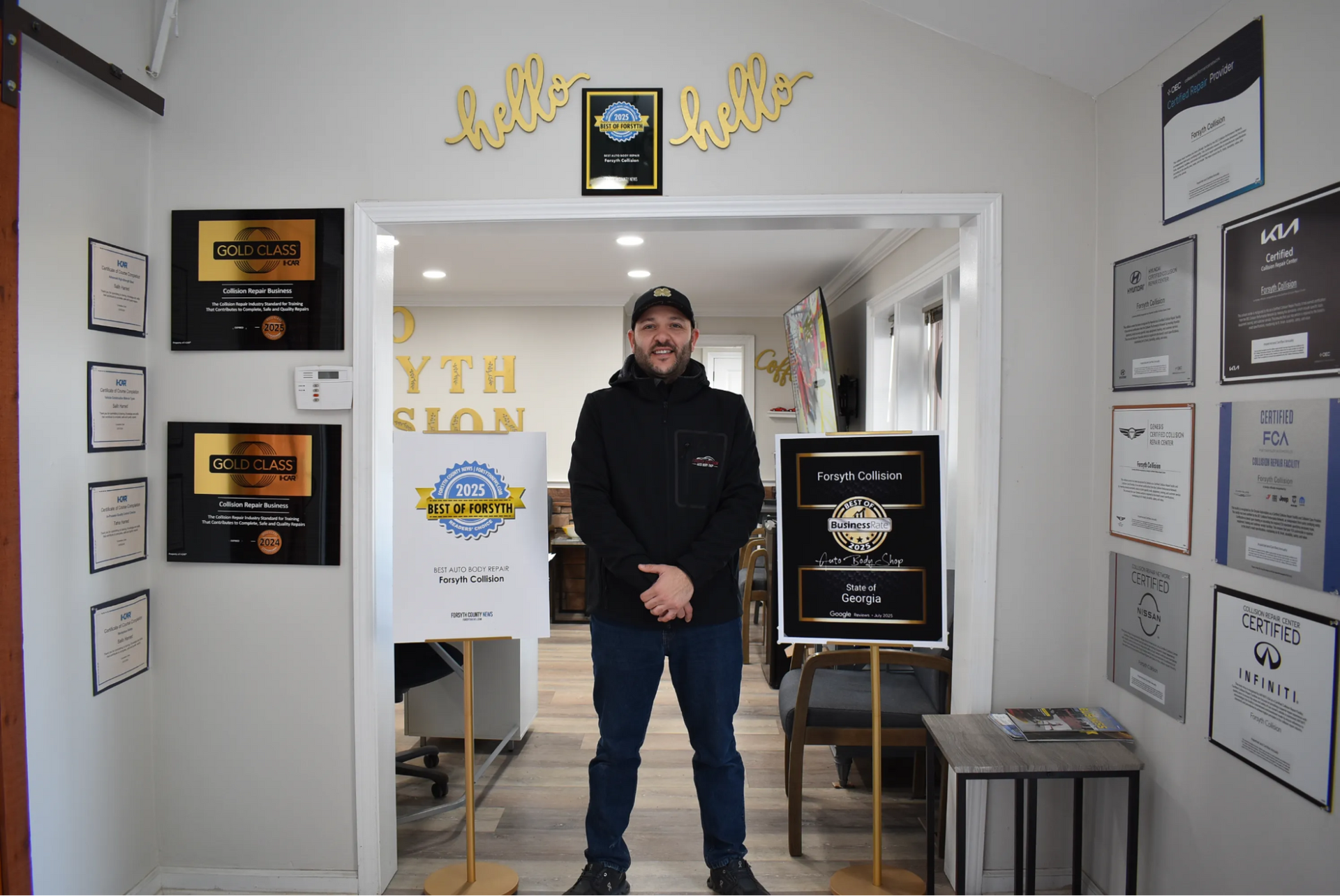
Salih Hamid is the owner of Forsyth Collision in Cumming, GA, where he makes sure the team has the latest tools and training. Meet Salih and the team.